







Cornell Cooperative Extension of Fulton and Montgomery Counties invites you to sponsor awards for the 2023 4-H Youth Shows at the Fonda Fair. If you were a sponsor in 2022, thank you for supporting Fulton & Montgomery County 4-Hers! All of our award recipients were thrilled with their prizes which ranged from grooming and feeding supplies, to chairs and plaques. But it’s not just about the prize; 4-H youth gain experience at the county fair that will teach them lifelong lessons and create memories they will always cherish. This summer you have the opportunity to make it happen again!
4-H Award Sponsor for Fonda Fair Awards
Posted 6/29/2023
Posted 6/29/2023

4H Exhibitor's Handbook
Posted 6/30/2022
Posted 6/30/2022
.jpg?width=100)
The 2022 Fonda Fair 4-H Exhibitor Handbook is now available! Please see the full exhibitor handbook attached to this email.
When reviewing the handbook and entering for 4-H shows at the Fonda Fair, please read rules and class descriptions carefully.
Also, check out the sign-up forms in the back of the handbook for snack bar shifts, teen leader positions, adult helper shifts and more!
Be sure to sign-up early to ensure you are assigned to your desired shift/position.
All Entry Forms and sign-up sheets must be postmarked by July 27, 2022 or delivered to the 4-H Office no later than August 1, 2022 by 4:00 PM.
If entries are faxed or attached via email, they must be received no later than August 1, 2022 by 4:00 PM.
Entries will not be accepted after the deadline.
Email: ky292@cornell.edu - gad23@cornell.edu
Fax: 518-853-2129
If you have any questions, please don’t hesitate to contact the 4-H office.
4H Pie & Cheese Sale
Posted 2/2/2022
Posted 2/2/2022

Pie sale is back! Now includes five varieties of Cabot cheese. Pies come frozen. They are available in regular or sugar free. All pies/cheese must be pre-ordered and paid for by March 15th.
Orders will be available for pick up on Thursday, April 7th. We will notify you for pickup times and location. All proceeds stay in our counties to benefit our 4-H youth development program. Please feel free to share this fundraiser with your family and friends.
Cooperstown Junior Livestock Show
Posted 5/6/2021
Posted 5/6/2021
The Farmers’ Museum Junior Livestock Show will be happening this year! We hope you are all excited to participate! Please keep in mind that due to COVID-19 safety regulations, the show definitely won’t look like what we are used to and there may be some guideline changes between now and then.
If you plan to participate in the Junior Livestock Show, 4-H enrollment paperwork and all Animal ID forms/registration paperwork must be submitted to the 4-H office by 4:00pm on 6/1/21 to be eligible!
Please note: Cloverbuds are not eligible to participate.
New for 2021!
-The Junior Livestock Show book will only be available online as a .pdf document or a printed copy may be requested from the 4-H office.
-There will be no-overnight accommodations.
-All shows will be one day shows.
-We are limited to 200 people on grounds, so we ask no spectators and only 2 adults per exhibitor.
-The shows will be streamed live.
-There will be a Meat Goat show offered this year.
2021 Show Schedule
SUNDAY, JULY 11
Dairy Goat Show (All Day), Sheep Show (AM), Meat Goat Show (PM)
7:00—9:30 Vet Check in and registration
10:00 a.m. Dairy Goat Showmanship and Breed Classes
10:00 a.m. Sheep Showmanship and Breed Classes
2:00 p.m. Meat Goat Showmanship and Breed Classes
MONDAY, JULY 12
Beef Cattle Show (AM), Swine Show (PM)
8:00– 10:00 Vet check in and registration
10:30 a.m. Beef Cattle Showmanship followed by breed classes
2:30 p.m. Swine Showmanship followed by breed classes
TUESDAY, JULY 13
Dairy Cattle Show—JUNIOR ANIMALS ONLY
8:00 a.m.—11: a.m. Vet Check in and registration
12:00 p.m. Dairy Cattle Showmanship and Breed Classes
HOW TO ENTER THE SHOW-Online entry for 2021:
Here is the link to the online JLS Registration page:
https://cornell.ca1.qualtrics.com/jfe/form/SV_bkpB2kb3host6dM
A Note to Exhibitors:
Once all entries have been entered into the form, the user must choose to “Submit & End Registration”. Before submitting the form, the user will have the option to navigate back to previous pages and forward again. To avoid technical issues, the user should always return to the page of the last entry they entered before submitting.
If you have any questions, please don’t hesitate to contact the 4H office. 518-853-2135
Starting Seeds? Best Practices.
Posted 3/18/2021
Posted 3/18/2021
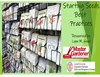
Starting Seeds Indoors? Now is the time. See the attached packet for in-depth information on starting your seeds. If you have further questions, give our office a call at 518-853-2135.
Introduction to Beekeeping - Tuesdays: January 12 - March 2, 2021
Posted 12/16/2020
Posted 12/16/2020
Getting your hive operation off the ground.
Whether you are currently keeping honey bees, or are considering adding them to your farm, a basic knowledge of bee biology, diseases, pests, and setting up your colony are essential for success.
Understanding the difference between a drone, queen and nurse bee, knowing how to site your apiary properly, having a plan for Varroa mites, and knowing effective winterizing techniques will help ensure your hive(s) make it through the winter so you can harvest honey the following season.
This course, taught by experienced beekeepers and NYS Honey Bee Extension educators will give you real-world experiences paired with academic concepts.
https://smallfarmcourses.com/p/bf-160-introduction-to-beekeeping
NYS Bag Ban to start )ct 19, 2020
Posted 10/1/2020
Posted 10/1/2020
DEC Announces Enforcement of New York's Plastic Bag Ban to Start Oct. 19, 2020
State Encourages New Yorkers to BYOBagNY
New York State Department of Environmental Conservation (DEC) Commissioner Basil Seggos announced today that DEC will begin enforcement of the State's ban on single-use plastic carryout bags on Oct. 19, 2020. The plastic bag ban, which went into effect on March 1, was not enforced per an agreement between the parties in a lawsuit brought by Poly-Pak Industries, Inc., et al, in New York State Supreme Court.

4-H Project Showcase
Posted 9/3/2020
Posted 9/3/2020
Vist our showcase of 4-H projects that represents areas of interest to Fulton-Montgomery 4-H youth.
4H Meeting Guidelines Due to COVID-19
Posted 8/25/2020
Posted 8/25/2020
Attention all enrolled 4-H Adult Volunteers and 4-H Youth/Families. Fulton-Montgomery 4-H will be allowing 4-H Clubs to meet in-person starting soon. Before we are able to allow in-person events, meetings or activities, we must have our volunteers trained in COVID-19 safety procedures and a COVID-19 Assumption of Risk form signed and submitted to the 4-H office for all enrolled adult volunteers and youth participants.
Attached are the required COVID-19 4-H safety forms and a checklist to assist with submission of forms. Below is a link to the recorded zoom training that occurred last Thursday, August 20th. If you are an enrolled 4-H Adult Volunteer and you did not attend the training on zoom last week, it is mandatory that you follow the link below and watch the recorded training. This will take about 47 minutes to complete. Once finished, please complete and sign the required forms and submit them to the 4-H office. See checklist for more details.
The attachment listed as “COVID 4-H Safety Plan Ful Mont” contains these forms from the checklist;
The COVID-19 Safety Plan (pages 1-4), Health Screening (page 5), 4-H Meeting & Event Log (page 6) and 4-H Meeting & Event Safety Plan (page 7).
Fulton-Montgomery 4-H Volunteer Training - COVID-19 Safety Plan and Procedures
https://youtu.be/wP7eZkfDPX4
If you have any additional questions about the forms or training, please don’t hesitate to ask.
4H Mask Task
Posted 8/25/2020
Posted 8/25/2020
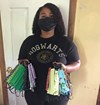
The NY State 4-H Mask Task gives back to your local community by sewing and donating a face mask and/or writing a note of gratitude to those in our community who are needing masks during this time! Fulton-Montgomery 4-H’er Evelyn Fessenden participated in this initiative earlier this spring, sewing over 30 face masks that were donated to the Fulmont Community Action Agency to be distributed to those in need of a mask. Thank you Evelyn!
| More Articles |