








The past year has brought about several changes, and challenges to Cooperative Extension. Declining budgets have necessitated a reduction in staff; challenged the way programs are delivered and the number of people reached; and the resignation of the former Executive Director left a void in the leadership position. Martin Luther King Jr. said, “Our very survival depends on our ability to stay awake, to adjust to new ideas, to remain vigilant and to face the challenge of change.” Looking for new ideas, and seeing opportunity in change is exactly what board and staff have done.
Working with CCE Administration at the university level, the board of directors created and implemented a plan that made sense both fiscally and programmatically. This included exploring shared leadership with a neighboring county and forming an agriculture advisory committee to explore ways to provide agricultural programming. During the time of transition senior staff took on additional leadership and financial roles to ensure that the Association remained running smoothly.
Cooperative Extension at all levels is facing funding challenges. Federal and State funds remain level, and county appropriations are shrinking. In times of financial strain, it does beg the question, “Is Cornell Cooperative Extension really needed and why fund it?” And, that’s a big question. We all know that Extension traces its roots back 149 years to President Lincoln and the passage of the Morrill Land Grant Act which established Land Grant Colleges whose mission was broad based education and extending the resources of the university to citizens of the state. The language of the Act provided that liberal and practical education be taught to the industrial class. At the time, the focus was on agriculture and the mechanic arts – but that has changed over the years depending on the needs of our communities.
While agriculture is still a vital component of the work we do here in Fulton and Montgomery County, our programming has changed over our 95+ years of existence to meet the needs of our communities. Extension works due to its inherent ability to change and its ability to keep pace and address multi-dimensional, complex, interdisciplinary issues.
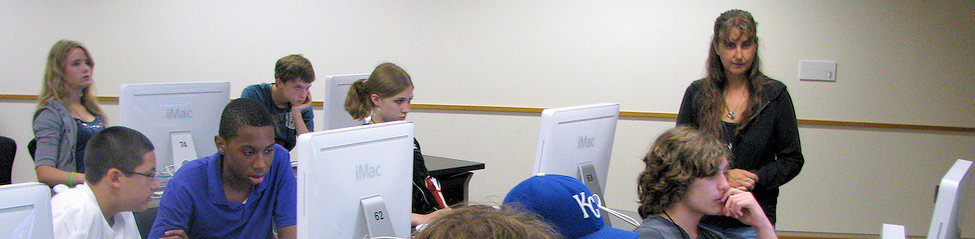
It has been said that the amount of new technical information is doubling every 2 years. For students starting a 4 year technical degree, this means that half of what they learn in their first year of study will be outdated by their third year of study. While Extension programs can’t slow the pace of technology, they can teach youth critical thinking skills. Industry leaders say that these skills must be taught early, and not when a student enters college. Yet our current educational standards do not allow for this. But, through a focus on Science, Engineering and Technology activities, the 4-H program is attempting to fill this need whether it’s through club activities or after school enrichment programs.
In case you did not know, in the last 5 minutes that I have been talking, there were 67 babies born in the US, 274 born in China, and 395 born in India. I ask, who is going to feed all of these people, and how? Extension is working to develop ways to grow more food, on less land, and that is more resistant to disease. At the other end of the spectrum, educators are also working locally, helping producers adopt season extension techniques, find new local markets, develop ways to add value to their raw products, and to address the growing demand of the local foods movement.
As a non-mandated agency in a tight budget year, the easy answer to the big question is – no, CCE is not needed. But during a time of economic recession, high unemployment, increased participation in social programs, severe weather events, and a growing interest in local food, I say Extension programming is highly relevant and is needed now more than ever. How can you afford not to fund Extension programs?
Extension educators and programs work to build capacity and empower individuals, families, and communities. Whether we are working with an individual, a business, or a community, building capacity allows that entity to identify, pursue, and achieve goals that they have identified for themselves. Capacity increases the likelihood that they will achieve the identified goals. Extension programs empower individuals, families, businesses and communities to acquire the attitudes, skills, and abilities needed to examine their situation and actively participate in creating meaningful futures.
It is difficult to put a value on these kinds of outcomes but this empowerment and increased capacity leads to more successful individuals, families, and business and therefore, stronger, more vibrant communities.
Extension work is not done in a vacuum. In order to be successful, Extension partners and works collaboratively - collaborations are both sources of program referrals and funding. In addition, we can’t forget our numerous volunteers which serve as 4-H leaders, master gardeners, board members, program committee members, and numerous fair volunteers. All of these volunteers put in countless hours to help extend our reach and deliver program.
And currently, we are in the process of working collaboratively with our neighboring Associations to create a Shared Business Network. These Shared Business Networks are an attempt to create efficiencies and lower the cost of doing business around the office functions of HR, Information Technology, and Finance. For the last 8 months, this association has been sharing an executive director with Washington County rather than hiring a full time individual to serve the single association. This has helped put money into program, rather than administration. As we move forward, we hope to do business better, together.
So why fund Extension?
- Because Extension programs are relevant and meet the current, and every changing needs of our communities.
- Because Extension programs build capacity within individuals, families, and businesses, and
- Because Extension programs use a collaborative approach – working better together, we can achieve better outcomes.
The Extension system is experiencing several points of stress bringing about many changes both to the system, and locally to the Associations. This time has been, and will continue to be, a time of uncertainty filled with even more changes and challenges. Yet, this is also a time of great opportunity.
Here in Fulton and Montgomery Counties, we have seen our county appropriation cut; other sources of funds once considered “secure” be reduced; and level funding in State 224 and Smith Lever funds. This has led us to examine priorities and explore new ways of doing things.
This is a time to return to our core mission while at the same time embracing change and renewal. We must find a balance between our heritage and new innovation, a balance between tradition and modern day relevance. In the years to come, we must have an open, honest, and serious dialogue, at all levels of the system, about the challenges with which we are faced. We must honor our history, yet have a willingness to reinvent and innovate. And we must do this while maintaining existing relationships and personal connections, while at the same time forming new relationships – as these relationships are the essence of Extension work.
If Extension is to remain strong and relevant here in Fulton and Montgomery Counties, and across NYS, it will require thoughtfulness, and courage to make very difficult decisions. We need to stay focused and communicate with confidence. We need to look for ways to get better, smarter, more efficient, and push for reinvention and innovation while at the same time, delivering relevant, high quality, research based programs. We must do this while balancing the needs of the System, with the needs of our local associations and the needs of our community.
If Extension hopes to remain on a path of excellence, now more than ever, it is a time for self-examination and a willingness to reinvent and innovate. It is a time to be honest and acknowledge our weaknesses and undertake transformative change, change that most likely will be difficult and even disruptive. Now is the time for Extension leadership, staff, volunteers, and boards to be optimistic problem solvers who look at issues creatively, but analytically. Now is the time to honor our past, while re-inventing our future.
Is Extension needed? Clearly, the work we do is not a mandate, but it is a long term investment . . . an investment in agriculture, an investment in our families, an investment in our youth, an investment in our economy, and clearly, an investment in our future. So yes, Extension is needed - it’s a proven investment, one that has shown that building capacity through relationships and cooperation actually works. Investing in Extension programming now will pay dividends long into the future and benefit all people of Fulton and Montgomery Counties.